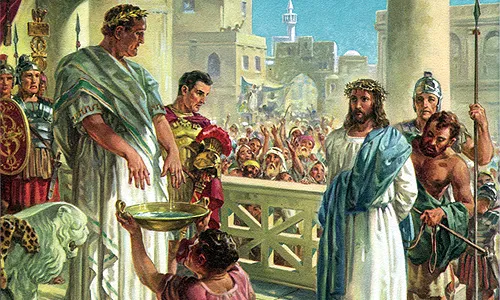
Artist’s depiction of the Roman prefect Pontius Pilate
presiding over the trial of Jesus
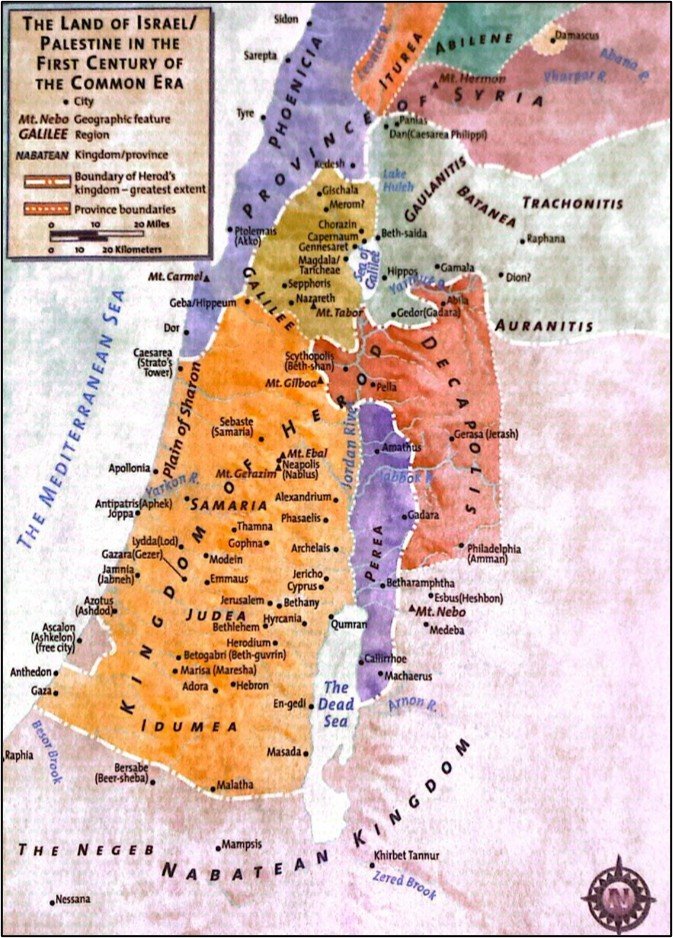
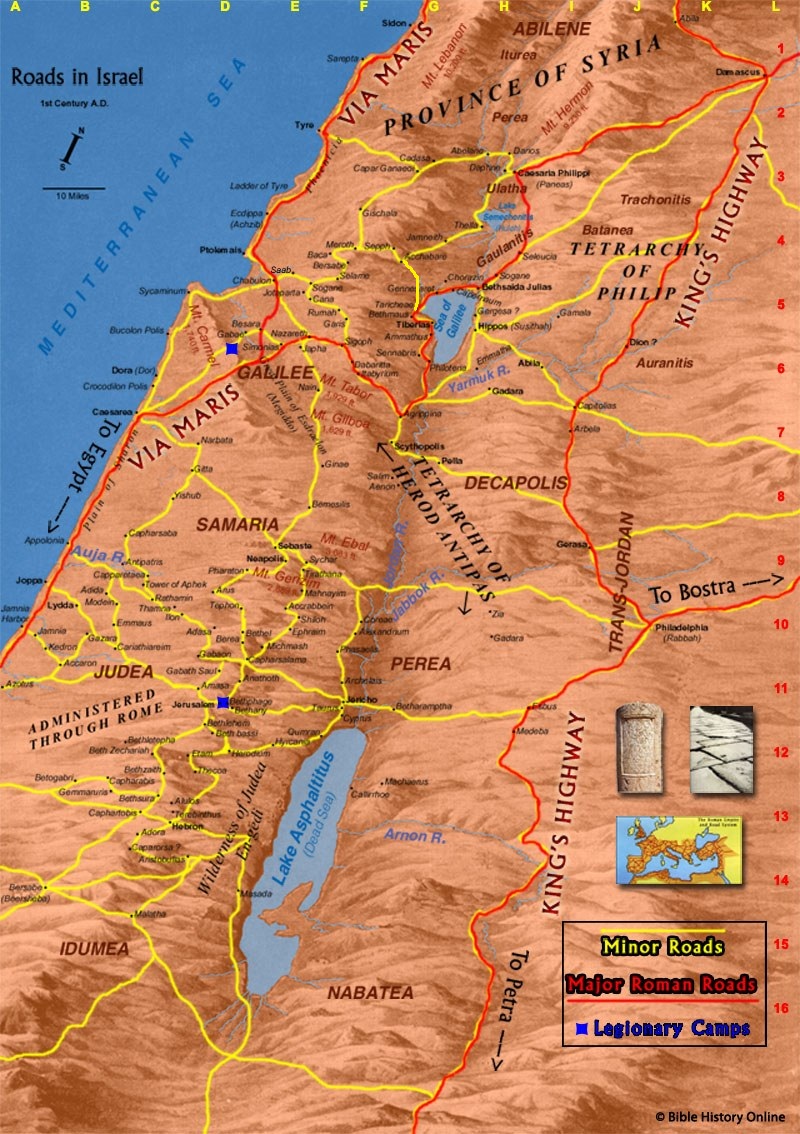
Anyone who has even a passing familiarity with the history of Israel in the time of Jesus (for Christians) or Hillel (for Jews) knows that the land was ruled by Rome at that time. For Christians, the authority of Rome is most evident in the execution of Jesus by the prefect Pontius Pilate. For Jews, it centers on their suppression of a revolt that occurred some thirty years later when Jewish rebels from across the social and economic spectrum united in an (unsuccessful) effort to assert their independence and drive the Romans from their land. In both cases the Romans come off as “the bad guys” and oppressors whom no self-respecting Jew or Christian could support.
We don’t know much about how the earliest followers of Jesus viewed and related to the Romans, but Jesus himself taught that they should pay their taxes and submit to the authorities, making them at least passive supporters of the status quo. The story for Jews is more complicated. I explore that complexity in my novel A Ram for Mars.
Most visible in the Jewish imagination are those Jews who stood up against the Roman oppressors in 66 CE despite overwhelming odds and created a free Jewish state for over two years until the Roman legions arrived and battered them into submission. The two events that virtually every Jew remembers from this conflict are the destruction of the Jerusalem temple in 70 CE and the last stand of the rebels at Masada in 73 or 74 CE.
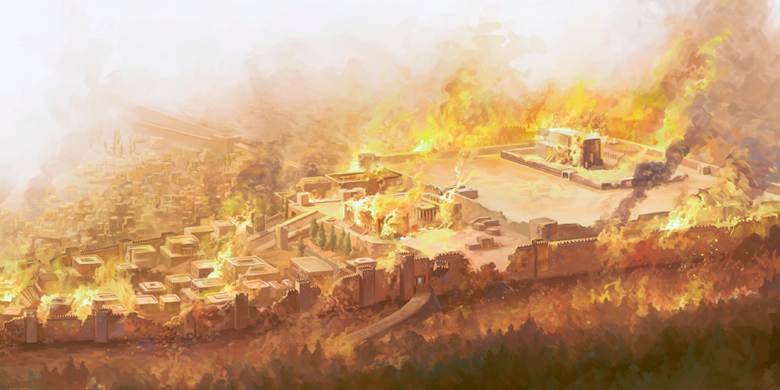
Artist’s depiction of the burning of the Jerusalem Temple in 70 CE (surrounded by a large courtyard)
As in most rebellions, however, Jews who actively supported armed insurrection were a minority of the population. If we take the American Revolution as a model, historians estimate that around 30-40% of the colonists supported the rebellion when it first broke out, 15-25% remained loyal to British rule, and the rest were either neutral or tried to avoid it.
The percentage of Jews who actively supported Roman rule was probably smaller since it was mostly a small class of wealthy families and their associates or clients who benefited from the arrangement. The normal pattern of Roman rule was to entrust operational authority to a segment of the local (in this case, Jewish) elites and hold them accountable for managing local affairs, keeping the peace, and collecting the taxes. These “partners” would of course take a cut of the taxes as compensation for their services, giving them a vested interest in preserving the status quo.
Unlike modern democracies, however, those at the top paid little or nothing in the way of taxes. Roman taxes fell almost exclusively on the poor, who experienced Roman authority primarily through the Jewish middlemen whom wealthy Jews hired to extract the money from the masses. These “tax-collectors” were vilified everywhere as collaborators and traitors. Their victims formed a potent element in the revolt that shook the country in 66 CE.
Those who benefited from the current system—primarily the leading priestly families and merchants of Jerusalem—fought hard to tamp down the initial fires of revolt and to bring the fighting to an end once it began. When their efforts proved fruitless, many decamped to the safety of Roman Caesarea, followed by hundreds of others as the war progressed. They cheered when the Roman army arrived. and some took an active role in the Roman effort to suppress the rebellion.
Most notable among these was the Jewish King Agrippa II, who grew up in the imperial court at Rome and enjoyed the personal favor of the Emperors Claudius and Nero. He sent 2,000 Jewish archers and cavalrymen to help the Roman general Vespasian put down the revolt and led a mixed band of auxiliary troops as part of Titus’s invading army. After the war, he and his sister moved to Rome, where he was rewarded with titles and lands and lived out the remainder of his days.
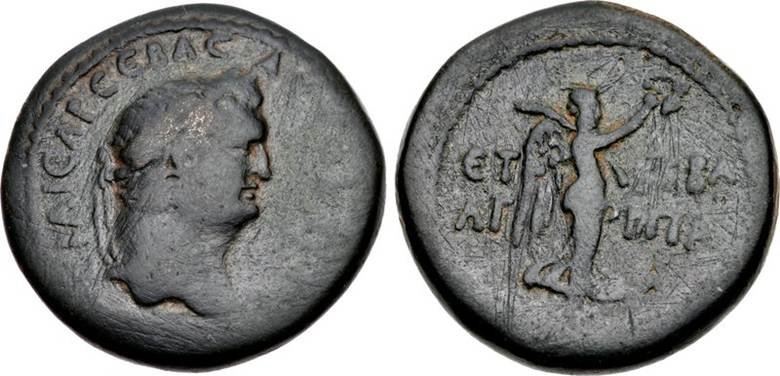
Bronze coin minted under Agrippa II bearing bust of Titus, Roman general who conquered Jerusalem
But wealthy Jerusalem elites weren’t the only ones who stood by the Romans. According to the Jewish historian Josephus, there were Jews among the Herodian soldiers who were brought in from Sebaste (Samaria) to suppress the interethnic fighting in Caesarea at the beginning of the war, and the Jewish citizens of Scythopolis fought alongside their pagan neighbors against Jewish attackers during the same period. In Sepphoris, the city council surrendered to the Roman general (and later Emperor) Vespasian as soon as the army arrived in Galilee and invited him to station a garrison inside their walls. They remained loyal to Rome throughout the course of the war, closing their gates to Josephus’s rebel forces and fighting back when he attacked them. Other cities has similar parties on their councils, though in most cases they were outnumbered by those who supported the revolt or sought to keep out of it.
Overlooked by Josephus but equally important to the Roman war effort were the innumerable Jews who supplied food, weapons, and other materials to the army from the time they arrived in Galilee. One of these men is the main character in my novel A Ram for Mars. Marcus does his best to stay out of the war, but his role as a trader shipping goods back and forth across the Sea of Galilee makes him strategically important to both sides in the conflict. As a member of the city council in Magdala, he also has to grapple with how his city should respond to the invading armies of Vespasian and Titus. The fact that his cousin is John of Gischala, a leader of the Galilean rebels who later became the nemesis of Josephus, makes his position even more tenuous, as does his son’s admiration of John. Then his son runs off to join his uncle during the siege of Jerusalem. What is he to do?
A Ram for Mars explores what the Jewish revolt might have looked like from the standpoint of a Galilean Jew who grew up in a Roman colony in Anatolia and migrated to Israel later in life. He finds it hard to comprehend the complaints of the rebels and does his best to temper their influence, yet he also feels a profound sense of loyalty to the land of his ancestors where he gained his first real understanding of what it meant to be a Jew. (His back story is told in the first two books of the series.) His experience offers an imaginative window into the inner conflict that many elite Jews must have felt as they struggled to hold onto both their social positions and their lifestyles in a world that was shifting rapidly under their feet.
A Ram for Mars is a work of fiction, but it draws on the best contemporary scholarship on the writings of Josephus, the archaeology of Galilee, and the social history of first-century Judaism. Readers who want to know more about the world of early Judaism and Christianity, including the ill-fated Jewish revolt against Rome, will find it both enlightening and entertaining.