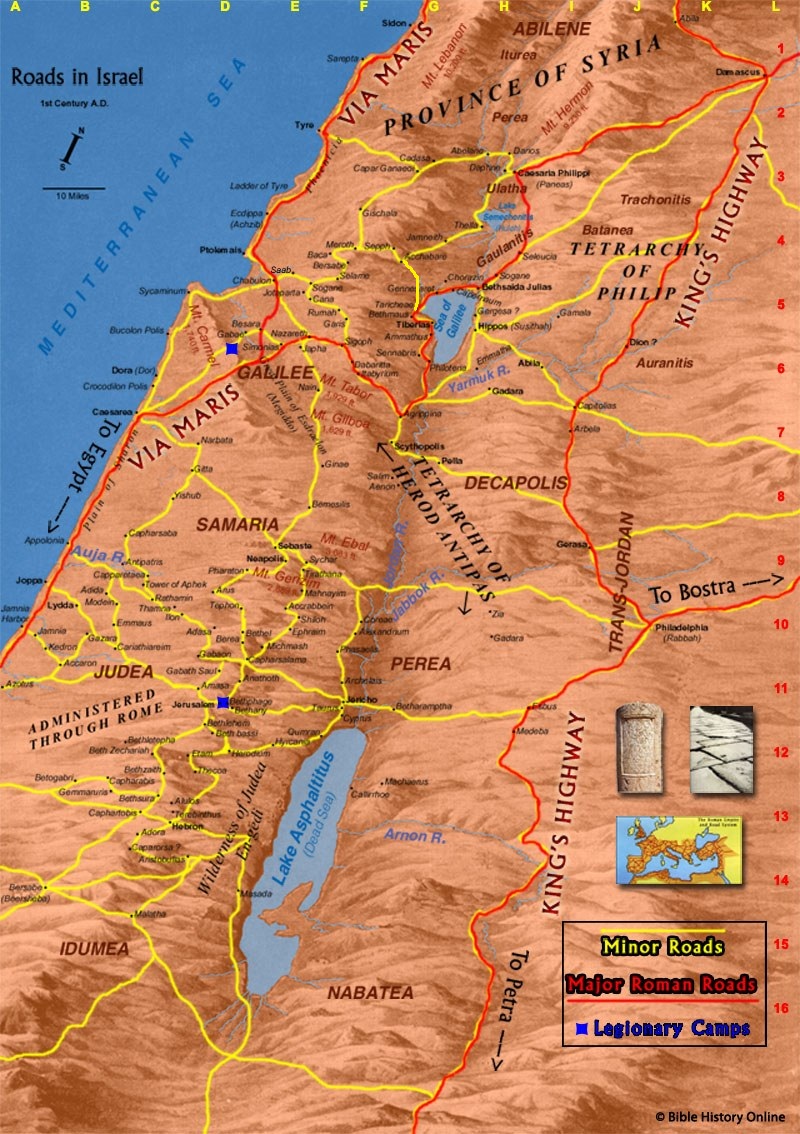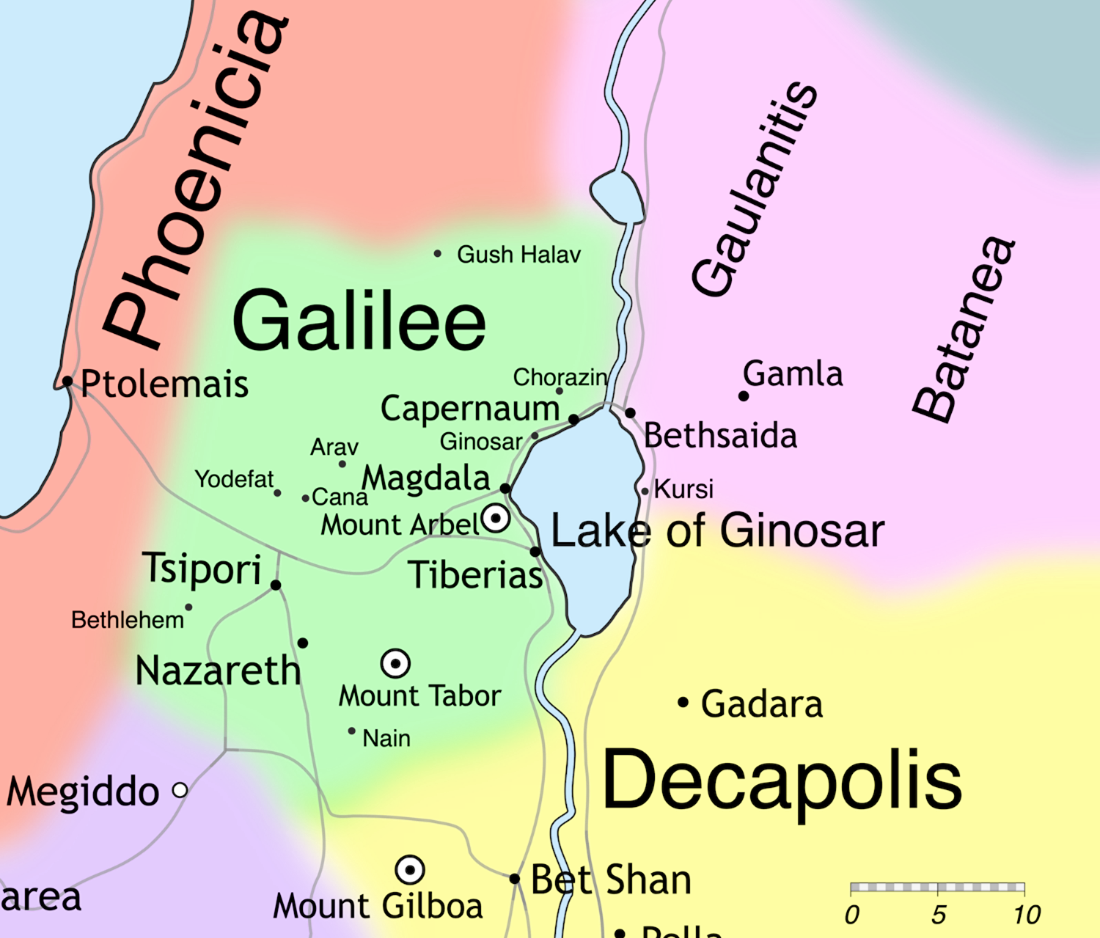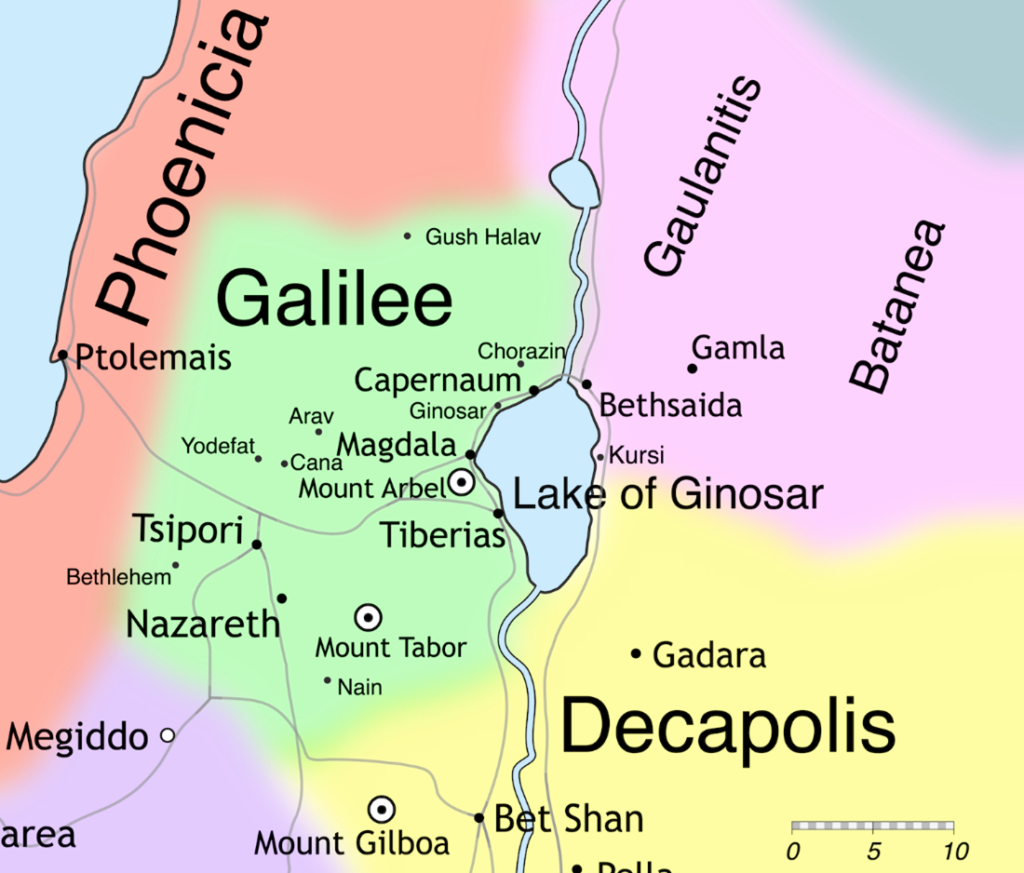
Galilee, the northern district of Israel, plays a vital role in A Ram for Mars as both the homeland of Marcus’s ancestors (through his grandmother) and the place where Marcus and Miriam decide to settle after their quest to find his mother comes to an end. My account of the Jewish revolt in 66-73 AD also focuses on how it was experienced in Galilee, not the Jerusalem-centered perspective that dominates the historian Josephus’s narrative. (For more on Josephus, see the “Author’s Preface” in A Ram for Mars.) It is therefore important to know something about Galilee in order to follow Marcus’s story.
Readers who have visited Israel with a tour group and seen the magnificent floor mosaics at Sepphoris (including some that depict pagan deities) or the painted synagogue at Magdala might be surprised by my depiction of Galilee as a religiously conservative, predominantly Jewish district where people were loyal to the Jerusalem temple and followed Jewish laws that limited intercourse with non-Jews and their ways, including the prohibition on creating visual images of humans or animals that could be taken as symbols of pagan worship.
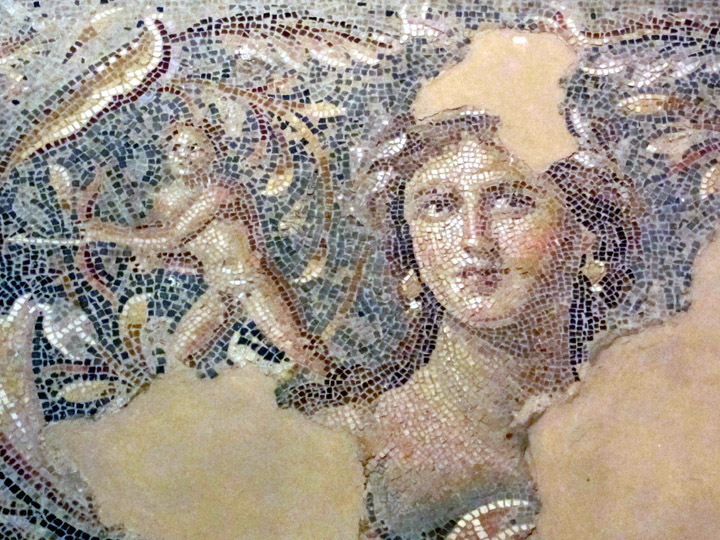
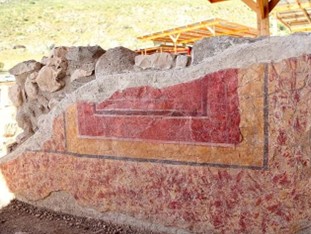
For much of the 20th century scholars studying the world of Jesus described Galilee as a land populated primarily by gentiles (a Jewish term for non-Jews) and dominated by gentile (mostly Greek) culture, with Jews as a minority. That image came in part from the Gospel of Matthew, where the beginning of Jesus’ public ministry is marked by a quote from Isaiah 9:1-2 that speaks of a light dawning on “Galilee of the Gentiles.” It gained strength in the 1980s when Galilean archeologists uncovered striking examples of Greek and Roman building styles (especially at Sepphoris), including elaborate floor mosaics and wall paintings of a type that were thought to be shunned Jews.
That interpretational edifice came tumbling down in the 2000s as archaeologists and historians carried out more careful investigations that showed gentiles were a small minority in Galilee with limited cultural influence in the first century AD when my stories take place. The consensus now is that the buildings that had previously been used to assert gentile dominance were not erected until at least the 3rd or 4th century AD.
In the first century, by contrast, the available evidence shows that Galilee was populated by religiously conservative Jews who moved north from Judea in the 2nd and 1st centuries BC and remained stubbornly loyal to the Jerusalem temple and the Jewish laws that limited interactions with gentiles and their ways. Their homes and public spaces followed traditional models and were virtually devoid of mosaics and paintings depicting humans or nature scenes.
As elsewhere in the empire, some of the wealthy Jewish elites in the cities adopted elements of Greek culture (particularly dress and language), but they continued to be practicing Jews who were careful to avoid offending the religious sensibilities of their neighbors. The only places in Galilee where Greek or Roman cultural styles would have exercised any significant influence were Magdala, which was founded as a Greek city before Jews became a majority in Galilee, and Tiberias, which was built by king Herod Antipas along Roman lines.
My own depiction of Galilee follows the consensus in painting it as a religiously conservative Jewish district overlaid with a Greek patina among the wealthy elites. Marcus and Miriam, who had spent their entire lives in Greco-Roman cities, would have found such a culture strange to say the least. Years of effort would have been required to overcome the suspicions of their neighbors and gain acceptance as fellow Galileans.