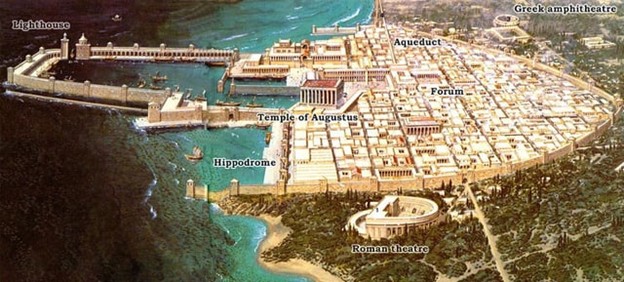
Artist’s rendition of Caesarea Maritima, based on archaeological ruins at the site
Golda Meir, former prime minister of Israel, once quipped, “Let me tell you the one thing I have against Moses. He took us forty years into the desert in order to bring us to the one place in the Middle East that has no oil!”
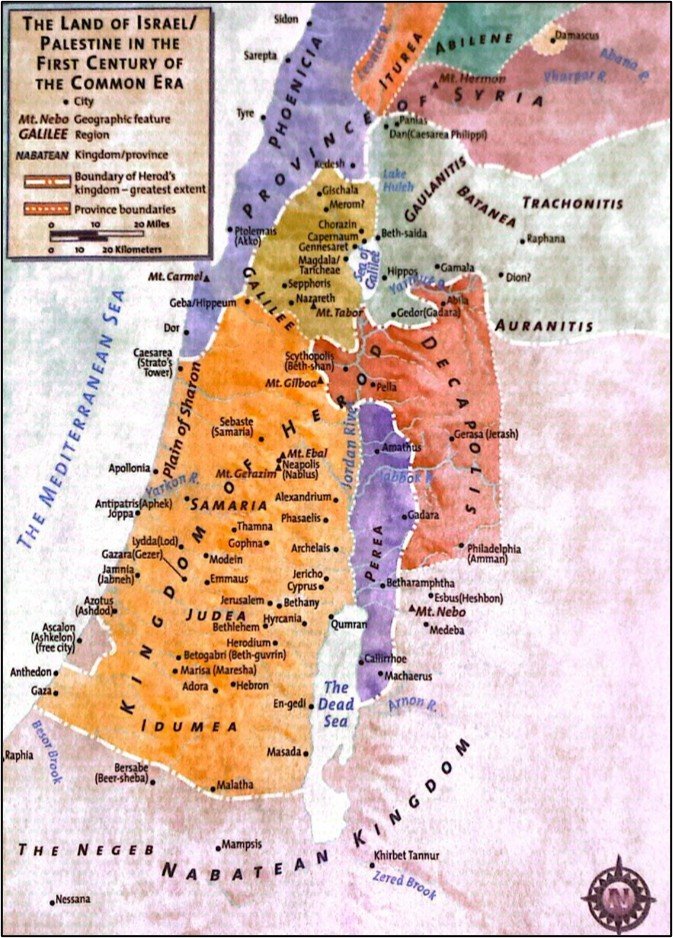
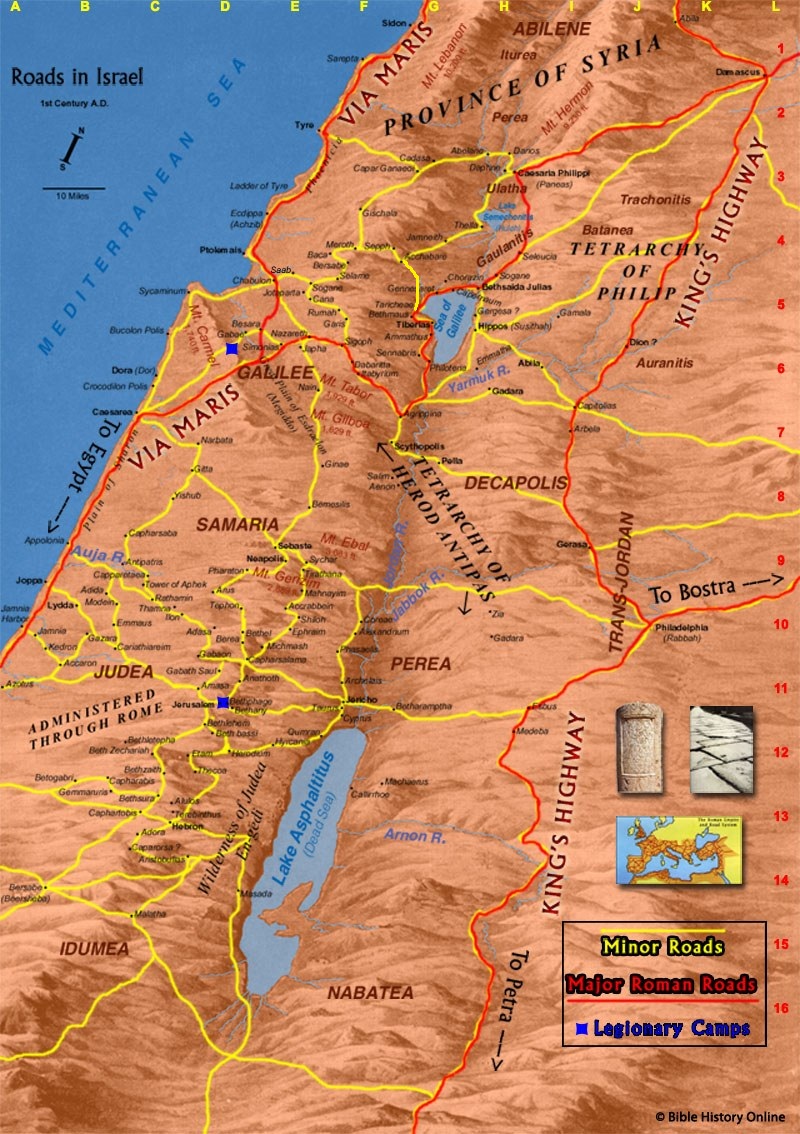
The same could be said about water—there’s only one constantly flowing river in the land, the Jordan—and ports. The modern state of Israel has some 170 miles of coastline along the Mediterranean Sea, yet there are no natural deep-water harbors where Roman merchant vessels could dock to load and unload cargo and take refuge in bad weather. The only ports, Jaffa in the center of the country and Ptolemais in the north, were too small and shallow to support king Herod’s plan for regular trade with Rome and other ports to the west.
To get around this problem, Herod began in 22 BC to construct a massive harbor on the site of a small fishing village that would rival any port on the Mediterranean. He named it Caesarea in honor of his patron, Caesar Augustus, and hired Roman engineers to carry out the project. They used cutting-edge building techniques, including concrete that hardened under water, to construct a 40-acre harbor capable of servicing up to 300 ships. They also built a Roman city on the land side to serve as Herod’s capital, including all of the cultural facilities that typified Greek and Roman civic life: a theater, a racetrack, a bathhouse and swimming pool, temples to various gods and goddesses, and a huge palace complex for housing Herod and his guests.
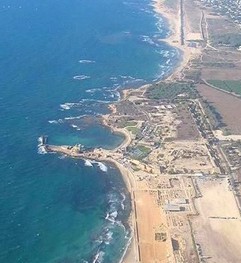
Aerial view of modern archaeological site at Caesarea
The presence of so much pagan culture in the land of Israel was a constant thorn in the sides of devout Jews from the time the city was built, especially the temples. Most troubling was a massive temple to the goddess Roma (a personification of Roman power) and the divine Augustus that stood above the harbor, marking Caesarea as a place dedicated to pagan deities. According to the Jewish Scriptures, the God of Israel had punished their ancestors for worshipping foreign gods in a land that belonged to him alone. Many Jews believed that their continued toleration of such practices was the reason why God allowed foreigners to rule over them.
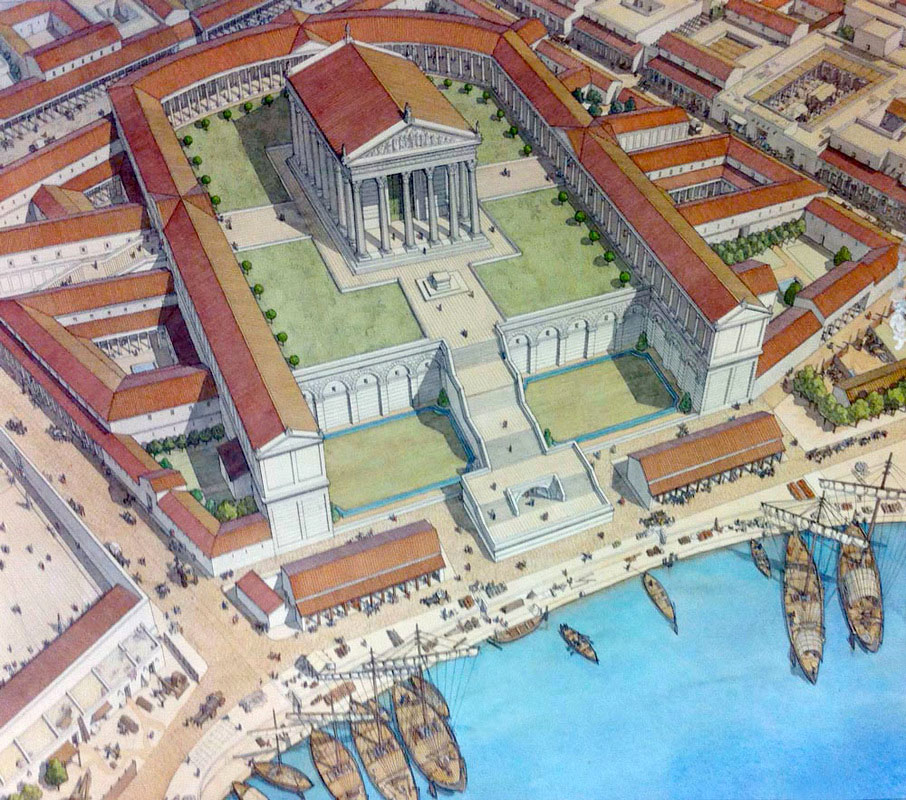
Modern reconstruction of the temple of Rome and Augustus
While the majority of Caesarea’s residents were foreign-born (Greeks, Romans, Syrians, Egyptians, etc.), Jews also made up a sizeable part of the population. Conflict was inevitable as both sides claimed that the city belonged to them—the Jews because it was located in their territory and built by a Jewish king, the pagans because its constitution and cultural practices were fundamentally Greek and not Jewish.
Several instances of conflict between Jews and Greeks are narrated in A Ram for Mars, including the decisive battle in 66 AD that led to the outbreak of the Jewish Revolt. Marcus and Miriam, who are at home in both cultures, find these conflicts bewildering, yet they have no choice but to navigate a way through them. How they balance these conflicting loyalties is one of the core themes of my story.