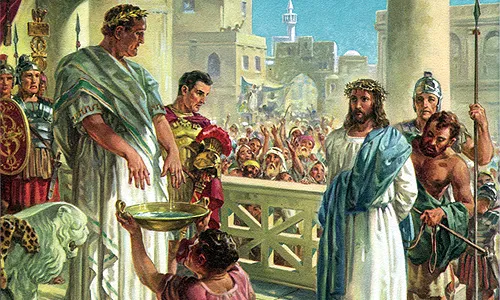
Anyone who has heard anything about Jesus knows that he was crucified by Roman soldiers after being condemned by the Roman prefect Pontius Pilate. But what were Romans doing in that part of the world?
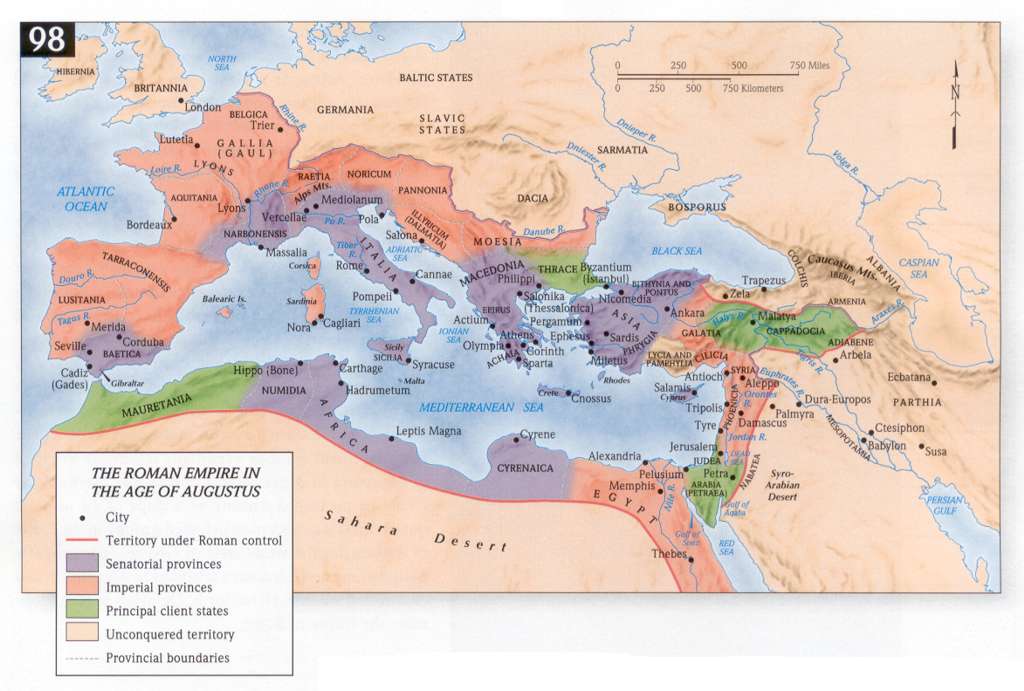
The ancient city of Rome did not set out to conquer the world. What we know as the Roman Empire was the product of a long series of localized decisions and conflicts over hundreds of years that brought more and more territory under Roman control. By the time when my stories take place, Rome ruled all of the lands that bordered the Mediterranean Sea together with large swaths of inland territory, including the areas that we know today as Europe (apart from Germany), Turkey, and Egypt.
But “ruling” meant different things in different places. Large garrisons of soldiers were stationed around the periphery of the Empire to keep the recently conquered “barbarian” peoples in check (Iberians and Celts in Spain, Gauls in France, Jews and Syrians in the Middle East), while lands incorporated earlier experienced only a light Roman presence—a governor and his staff, a handful of officials, and various traders and business people. Civic affairs were managed by councils made up of wealthy local citizens.
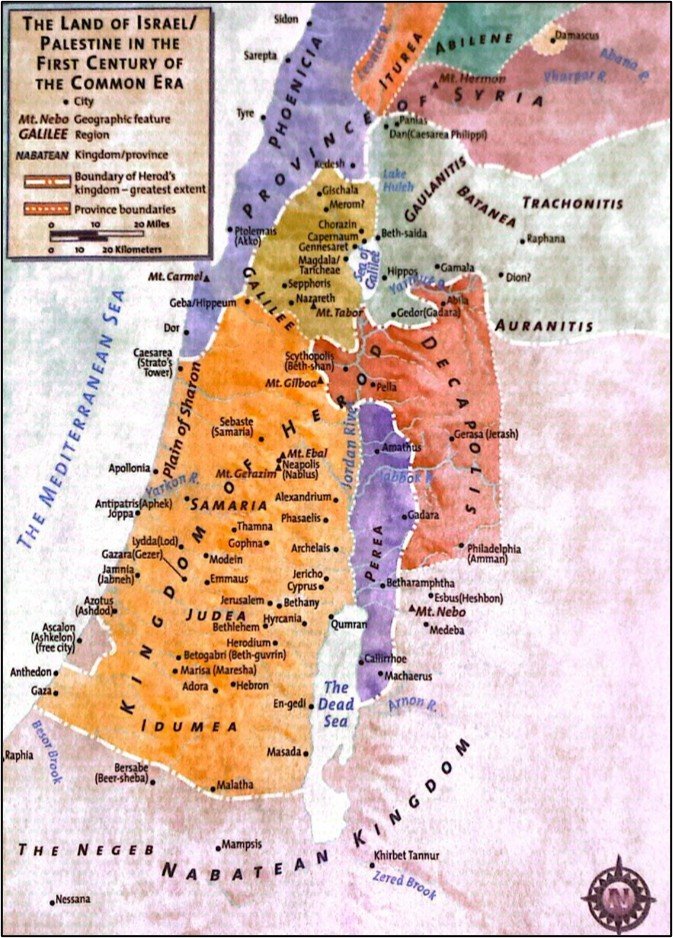
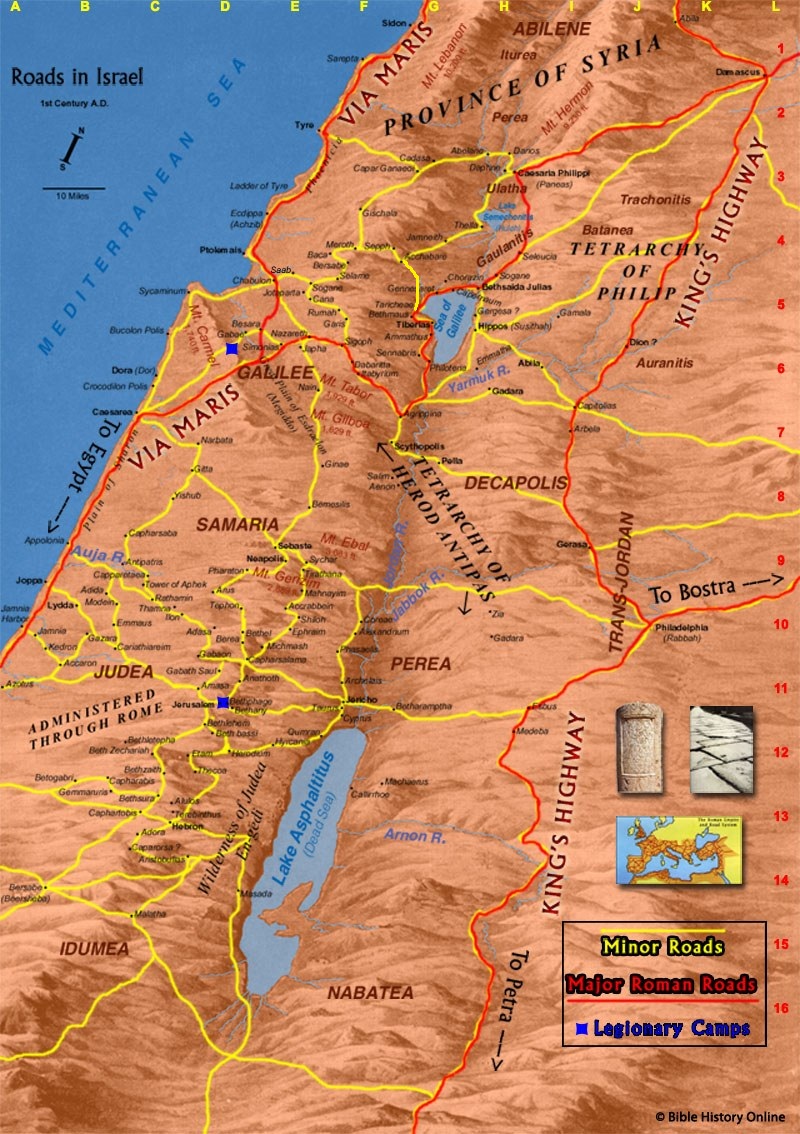
The land that we know today as “Israel” did not come under full Roman control until 63 BC when general Pompey intervened in a civil war between two claimants to the throne and made it part of the province of Syria. In 37 BC a Jewish official named Herod (later known as “Herod the Great”) was appointed “king of the Jews” under Roman oversight. His descendants, who also bore the family name of Herod, ruled various parts of the region until the end of the first century AD, though the southern district of Judea was placed under a Roman procurator in 44 AD after the death of king Herod Agrippa.
From the standpoint of Rome, Israel was the “wild, wild East,” a district on the border of the Empire that served as a vital buffer against the mighty Parthian empire. Security trumped all other concerns—local officials were charged with maintaining the peace and keeping the taxes flowing, regardless of the cost. Efforts by local Jews to assert their autonomy were met with bouts of repression that aroused even more hostility.
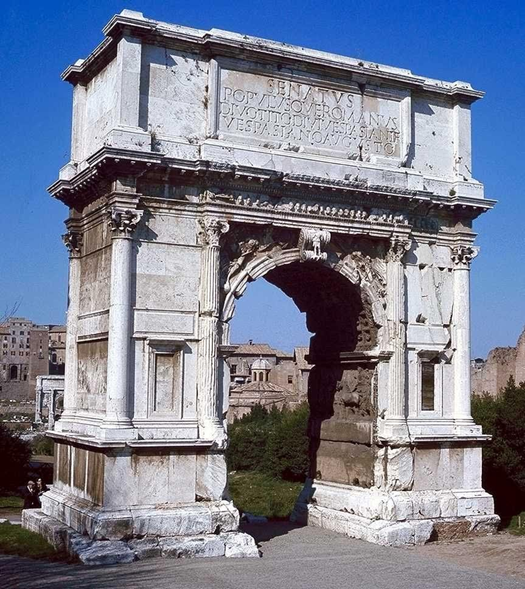
Arch of Titus, Rome
By the time Marcus and Miriam arrived to search for Marcus’s long-lost mother, the land was a seething cauldron of political unrest. Within a dozen years that unrest overflowed into open rebellion as narrated in A Ram for Mars (66-73 AD).
Putting down this Jewish Revolt was one of the hardest tasks ever faced by the Roman army. Their eventual victory was marked by a triumphal procession in Rome and enshrined in the massive Arch of Titus (above) that you can visit in Rome today. Note the spoils of war depicted on one of the interior panels of the arch (below) and the colorized reproduction above it.
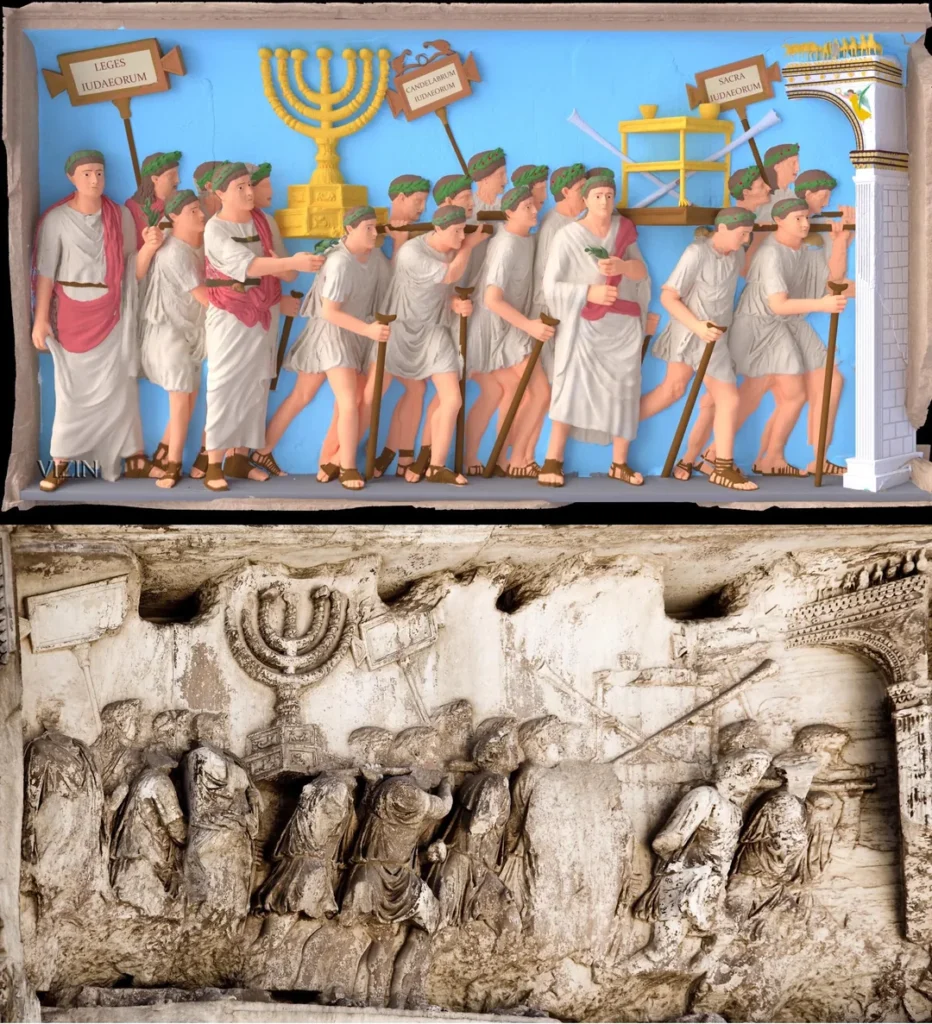
Panel from Arch of Titus (original and colorized)