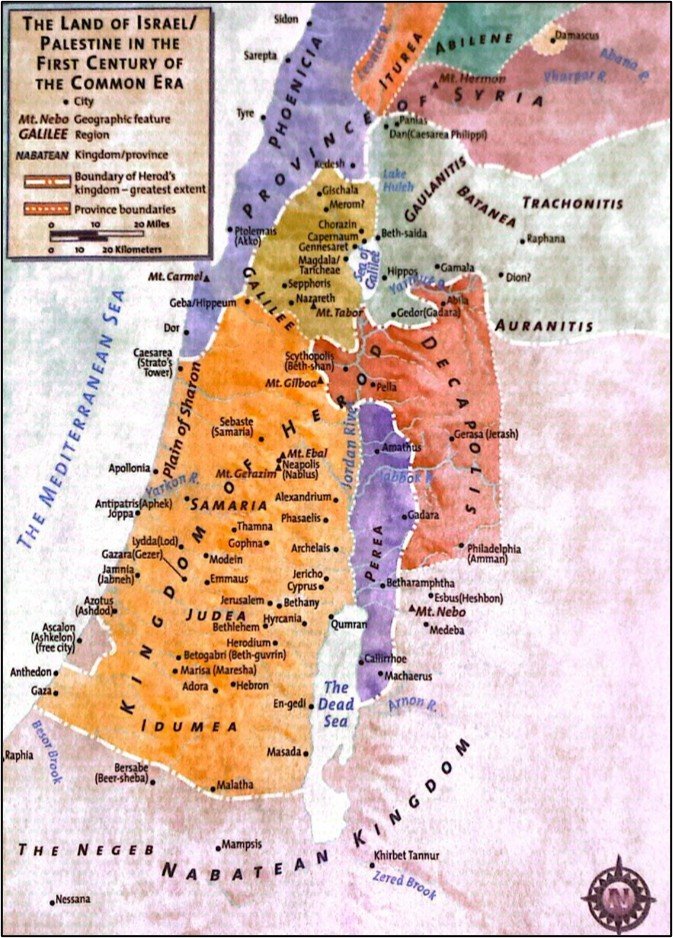
The city of Magdala plays a vital role in A Ram for Mars as the final stop on Marcus’s quest to find his mother and the place where he and Miriam decide to settle down and raise their family. Magdala was located on the western shore of the Sea of Galilee some four miles north of Tiberias, directly across from the Decapolis city of Hippos. It appears under its alternate name of “Tarichaea” (“salting/brining”) on the map above, reflecting its role in the salted fish trade.
From the standpoint of the cosmopolitan port of Caesarea or the religious capital of Jerusalem, Galilee was a remote district and Magdala a minor, unimportant fishing town that had been eclipsed by the city of Tiberias when king Herod Antipas constructed it as his new capital around 20 AD. In reality, however, Magdala was a vital cog in the international trade network that linked Rome and other western ports to Arabia, India, and other districts in the Far East. Knowing something about this network will help you to understand the the work that my main character, Marcus, is doing when he becomes a shipping merchant in Magdala.
Magdala had been a transshipment point for goods crossing the Sea Galilee for over a century by the time Tiberias was built. Its stone-built harbor, the only one on the west coast prior to the construction of Tiberias, had a long quay where several ships could be loaded and unloaded at once. Trade was brisk in both directions, with agricultural products moving eastward and luxury goods to the west.
Crucial to this trade were Arab merchants called the Nabateans who led camel caravans back and forth across the harsh Arabian desert during all but the hottest parts of the year. These caravans brought luxury goods like perfumes, spices, silk, ivory, pearls, and rare gems from distant lands to the Decapolis ports on the eastern shore of the Sea of Galilee (among other destinations), where they reloaded with agricultural products like olive oil, wine, grains, and salted fish from the western side of the lake for delivery to people along their eastward route. It was a challenging but lucrative business that required consummate navigational skills and deep knowledge of how to ferry a caravan across the desert.
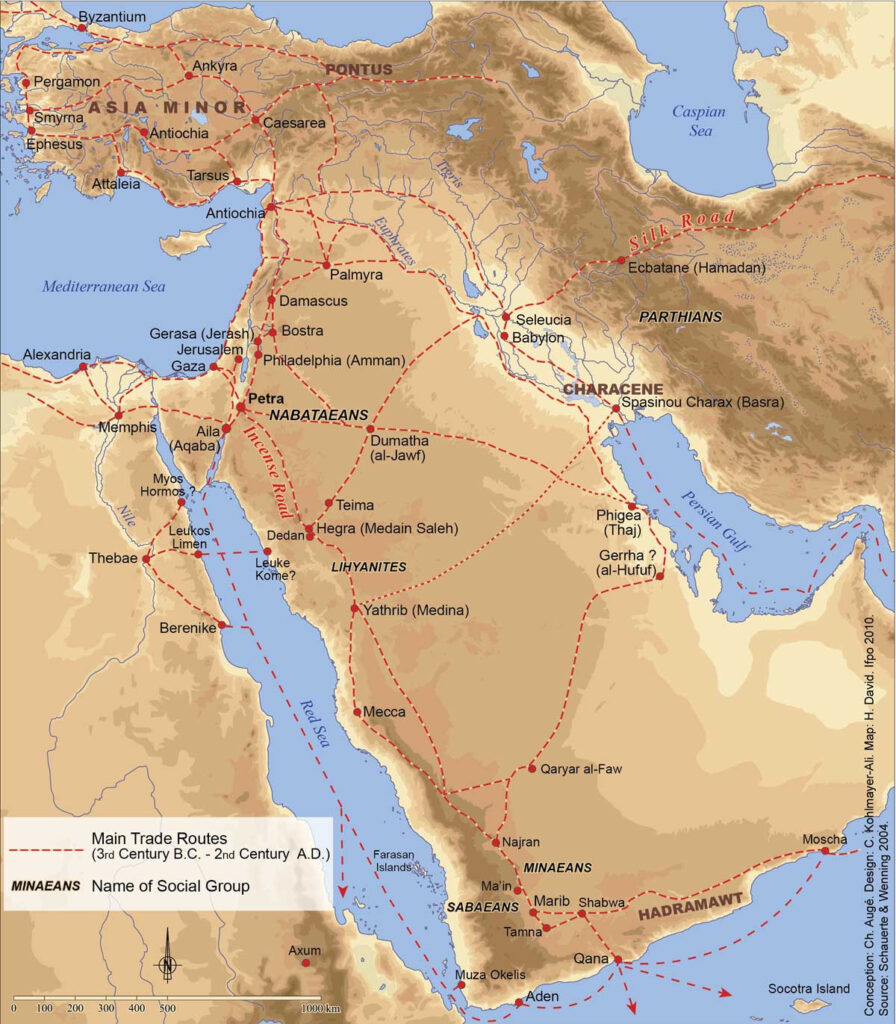
Long-distance trade routes use by Nabatean Arabs for transporting goods to and from the East
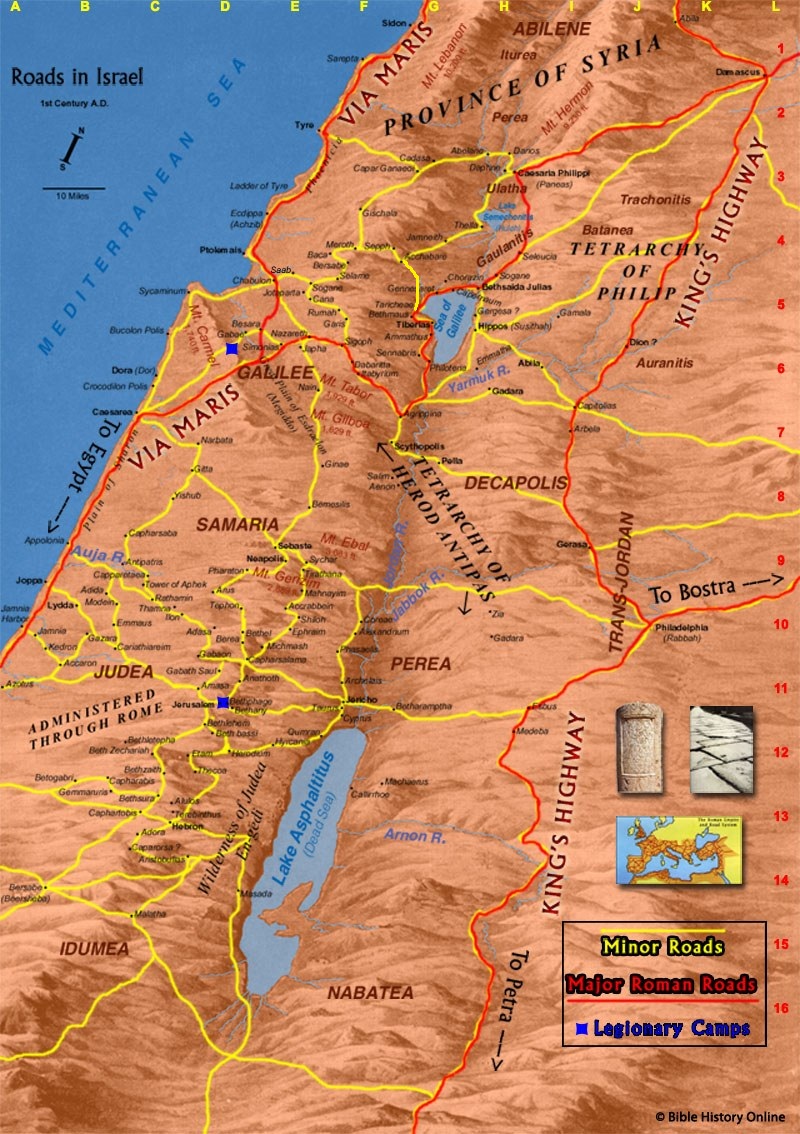
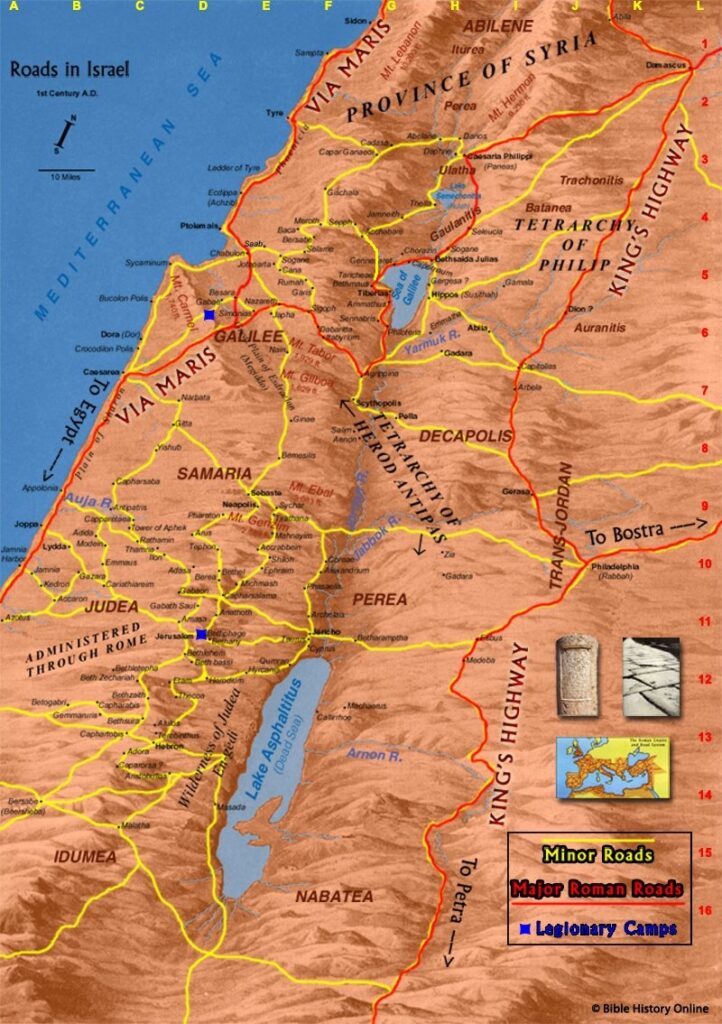
Merchants like Marcus and his cousins were the linchpin in this network, using their ships and crews to transport goods in both directions across the lake. Westbound cargoes were unloaded at Magdala and transferred to mule- or ox-drawn wagons for transportation by road to the Mediterranean ports of Ptolemais and Caesarea, where they were loaded onto ships heading for the West. The fact that no major warehouse facilities have been found at Magdala suggests that these transfers took place immediately–Magdala served primarily as a transit point, not a place for storing goods.
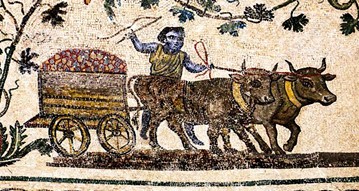
Mosaic of Roman ox cart with load
As both a shipowner and merchant, Marcus would have been a busy man with access to virtually any product that a person of his day could have desired. It is thus no wonder that both the rebels and the Romans wanted to make use of his services. Men like him were vital to keeping an army in the field, and their connections could not easily be replicated. But they had to be controlled in order to prevent them from selling to both sides, and resistance could be deadly. How Marcus struggles to navigate between competing generals while keeping his family safe is one of the central concerns of A Ram for Mars once the war breaks out.